Tree Lighting: Uplighting vs. Moonlighting | Victoria BC
Mature trees can become some of the strongest nighttime features on a property. Learn when to use uplighting, moonlighting, or both.
Read more


Joshua Julien
Owner and Lighting Designer
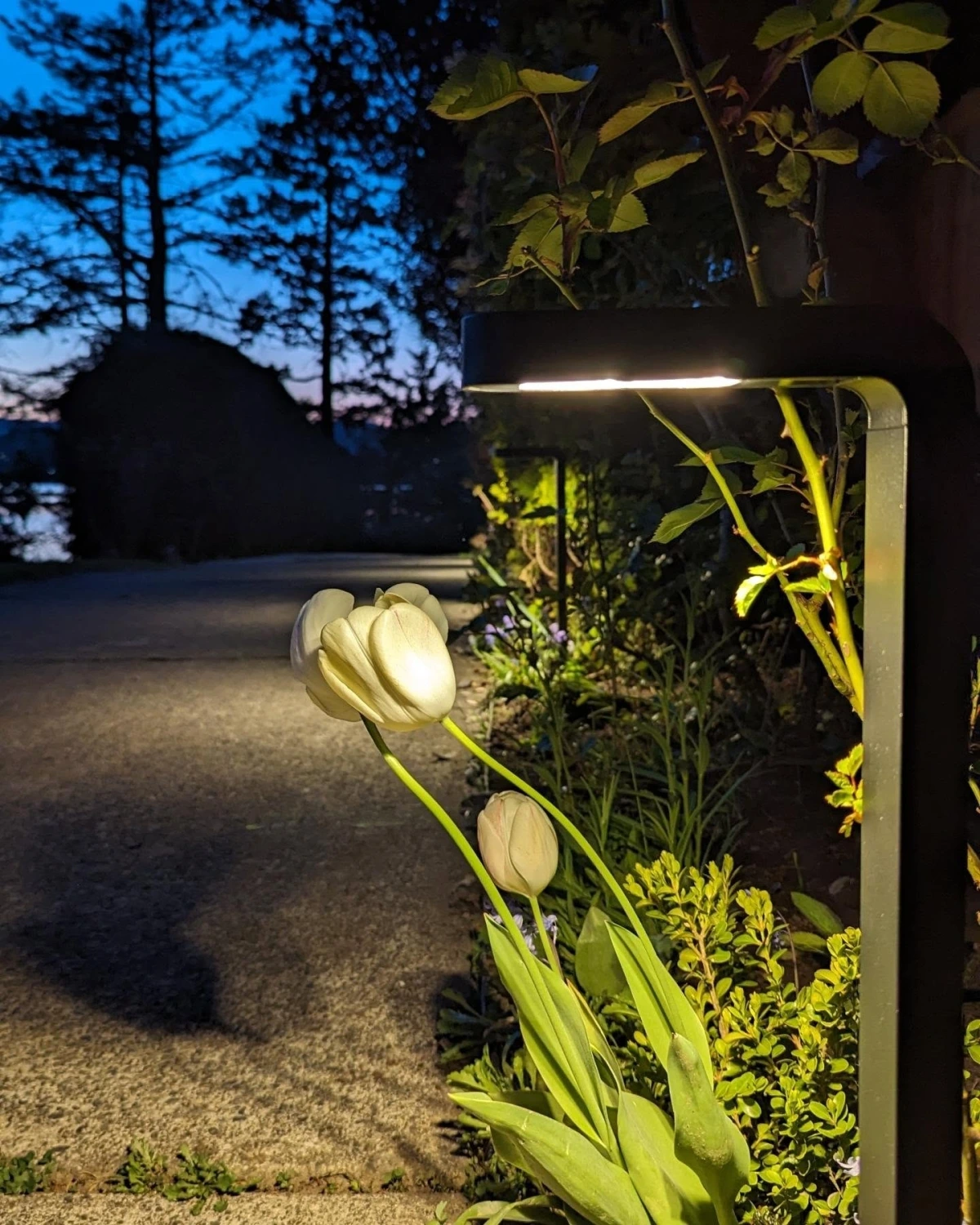
Professional landscape lighting can completely change a property after dark.
It can also go wrong in ways homeowners do not always expect.
Sometimes the problem is obvious: a fixture stops working, a connection corrodes, or a transformer is overloaded.
Other times, every fixture technically works, but the property still looks wrong. The lights are too bright, glare is visible from the house, every tree has the same beam on it, or the pathway looks like an airport runway.
That second category matters just as much.
A good landscape lighting system has to do two things well:
If you are considering professional landscape lighting, these are some of the most common problems worth understanding before you hire anyone.
One of the easiest mistakes in landscape lighting is assuming more light means a better result.
It usually does not.
When every tree, wall, pathway and garden bed is brightly illuminated, the property loses depth. Nothing becomes a focal point because everything is competing for attention.
Good lighting needs contrast.
Some areas should be brighter. Some should sit quietly in the background. And some areas should remain dark.
That darkness is not a failure in the design. It is part of the design.
If everything is illuminated equally, nothing feels important.
A fixture can produce a beautiful beam and still be unpleasant if you can see the light source directly.
This is glare.
It often happens when fixtures are aimed too aggressively, placed too close to walking areas, mounted without enough shielding, or positioned without considering where people will actually be standing.
The problem can be especially noticeable from inside the home.
A fixture that looks fine while standing beside it in the garden may shine directly into a living-room or bedroom window from another angle.
That is why we think about sightlines during design, not just what the fixture is illuminating.
The goal is usually to see the effect of the light, not the source creating it.
A tall narrow tree and a wide mature oak should not be lit the same way.
Neither should a stone wall, hedge, pathway and front column.
But many systems are installed with the same fixture and optic everywhere because it is easier.
The result can feel repetitive and flat.
A narrow beam may work beautifully on a tall trunk or architectural detail. A medium beam might reveal more of a canopy. A wider optic can create a soft wash through planting or across a wall.
Fixture count matters much less than whether the light coming out of each fixture actually suits the thing being illuminated.
This is one reason professional design becomes more valuable as a property gets more complex.
Path lighting is one of the most common places we see an otherwise nice property lose its character.
If path lights are installed directly opposite one another at perfectly repeated intervals, the walkway can start to look like an airport runway.
The path may technically be well lit.
It just does not look natural.
We generally prefer to stagger path lights and let the pools of light overlap naturally with the landscaping.
The planting, grade, curves in the path and fixture output should determine placement more than a tape measure.
Path lighting should help you understand where you are going without becoming the main thing you notice.
Landscape lighting lives outside year-round.
On Vancouver Island, that means extended moisture, rain, irrigation, soil, plant growth and, on some properties, coastal air.
Lower-quality materials can deteriorate much faster than homeowners expect.
Painted finishes can fail. Thin housings can corrode. Seals can break down. Adjustment points can seize.
That is why we pay attention to fixture construction and material, not just how the fixture looks when it is brand new.
Professional-grade solid brass is one material we use frequently because it performs very well outdoors and develops a natural patina over time.
Higher-quality aluminium and other materials can also perform well when they are properly designed for the environment.
The important thing is understanding what is actually being installed.
If you want to understand why fixture specification affects the total investment, our guide to landscape lighting costs in Victoria, BC breaks that down in more detail.
The fixture gets most of the attention.
The connection behind it is often where the real failure happens.
Low-voltage landscape lighting cable lives in a wet environment. If connections are poorly made or inadequately protected, moisture can eventually create corrosion, intermittent operation and complete fixture failure.
The frustrating part is that the problem may be invisible.
The fixture looks perfectly fine above ground while the connection behind it is deteriorating.
A professionally installed system should use appropriate waterproof connection methods and cable routing that can be serviced later.
This is one of the least glamorous parts of landscape lighting.
It is also one of the most important.
The transformer supplies the low-voltage system, but selecting one is not as simple as adding up fixture wattage and buying the smallest unit that works.
Cable distance, wire gauge, voltage drop, future expansion and how the system is divided all matter.
A large property may work much better with multiple transformers or strategically separated zones rather than one transformer trying to serve everything.
Poor planning can lead to inconsistent performance, difficult expansion and complicated service work later.
This becomes even more important on large custom homes and estate properties where cable runs can be substantial.
A system should be designed for the property it is serving, not just the fixtures being installed today.
A landscape lighting system is installed into an environment that never stops changing.
Plants grow.
Trees get larger.
Mulch gets added.
Garden beds are redesigned.
Landscapers move fixtures.
Roots and irrigation work affect cable.
A fixture that was perfectly aimed at a young tree can eventually be buried behind new growth.
This is one reason we do not think of landscape lighting as a completely maintenance-free product.
Periodic maintenance gives us an opportunity to clean fixtures, deal with plant growth, check the system and re-aim lights as the landscape changes.
A quality system should be adjustable.
It should be able to evolve with the property.
This is one of the biggest differences between installing outdoor lights and actually designing landscape lighting.
You cannot fully judge the result at two o'clock in the afternoon.
After dark, we can finally see:
Sometimes moving a fixture twelve inches changes the effect dramatically.
Sometimes the best adjustment is reducing the output.
Sometimes a fixture simply should not be there.
The job is not finished just because all the lights turn on.
Night aiming is part of the design process.
This may be the most important problem on the list.
A lighting system can have good fixtures, solid connections and a properly sized transformer and still produce a mediocre result.
That happens when the installation is built around fixture placement instead of design.
The process becomes:
Put a light at the tree.
Put a light beside the path.
Put another one at the next tree.
Repeat.
Professional design asks different questions.
What should someone notice first when they arrive?
What should they see from the living room?
Which tree deserves to become a focal point?
Where could glare become a problem?
Which areas should remain dark?
Does the property need another fixture, or does it actually need less light?
That is the difference between a system that simply operates and one that feels intentional.
If you are deciding whether that level of design is worth paying for, our guide to whether professional landscape lighting is worth it in Victoria goes deeper into that question.
Some problems only become obvious years later, but there are warning signs you can look for before installation even begins.
Be cautious if:
Those do not automatically mean the project will fail.
But they are worth asking about.
You do not need to become a lighting designer before hiring one.
But you should understand what you are buying.
Ask questions like:
A company should be able to explain the reasoning behind the system it is proposing.
If the answers are consistently vague, that tells you something.
Often, yes.
Not every problem requires replacing the entire system.
Depending on what is wrong, improvements may include:
Sometimes the biggest improvement comes from removing light, not adding it.
If the existing infrastructure is usable, a thoughtful redesign can often make a significant difference without starting completely from scratch.
Victoria has a relatively mild climate, but outdoor lighting systems still spend much of the year exposed to moisture.
Rain, irrigation, dense planting and coastal air all put pressure on fixtures, connections and cable.
At the same time, we experience long periods of early darkness through fall and winter.
That means homeowners may use and see their landscape lighting almost every evening for months at a time.
A mediocre system becomes very noticeable when you live with it every day.
A good system should perform reliably in the environment and continue looking intentional as the landscape changes.
Landscape lighting can go wrong in two very different ways.
The system can fail technically.
Or it can work perfectly and still look bad.
The best installations avoid both.
They use equipment suited to the environment, connections designed to survive outdoors, transformers and cable sized properly, and fixtures that can be serviced later.
But just as importantly, they start with a design.
The goal is not simply to make the lights work. The goal is to make the property look right after dark.
If you are comparing landscape lighting proposals, look beyond the number of fixtures and the total at the bottom.
Look at what each company is actually proposing to create.
If cost is part of that decision, read our full guide to professional landscape lighting costs in Victoria.
If you are weighing professional installation against doing it yourself, our DIY vs. professional landscape lighting guide covers that comparison in more detail.
At Light Right, we design and install professional landscape lighting throughout Greater Victoria and Vancouver Island.
We start with the property, the architecture, the landscape and the way you want to experience it after dark.
Then we design the system around that.