What to Expect from a Landscape Lighting Installation
See what happens during a professional landscape lighting project, from the initial site walk and design through installation, night aiming and ongoing maintenance.
Read more


Joshua Julien
Owner and Lighting Designer
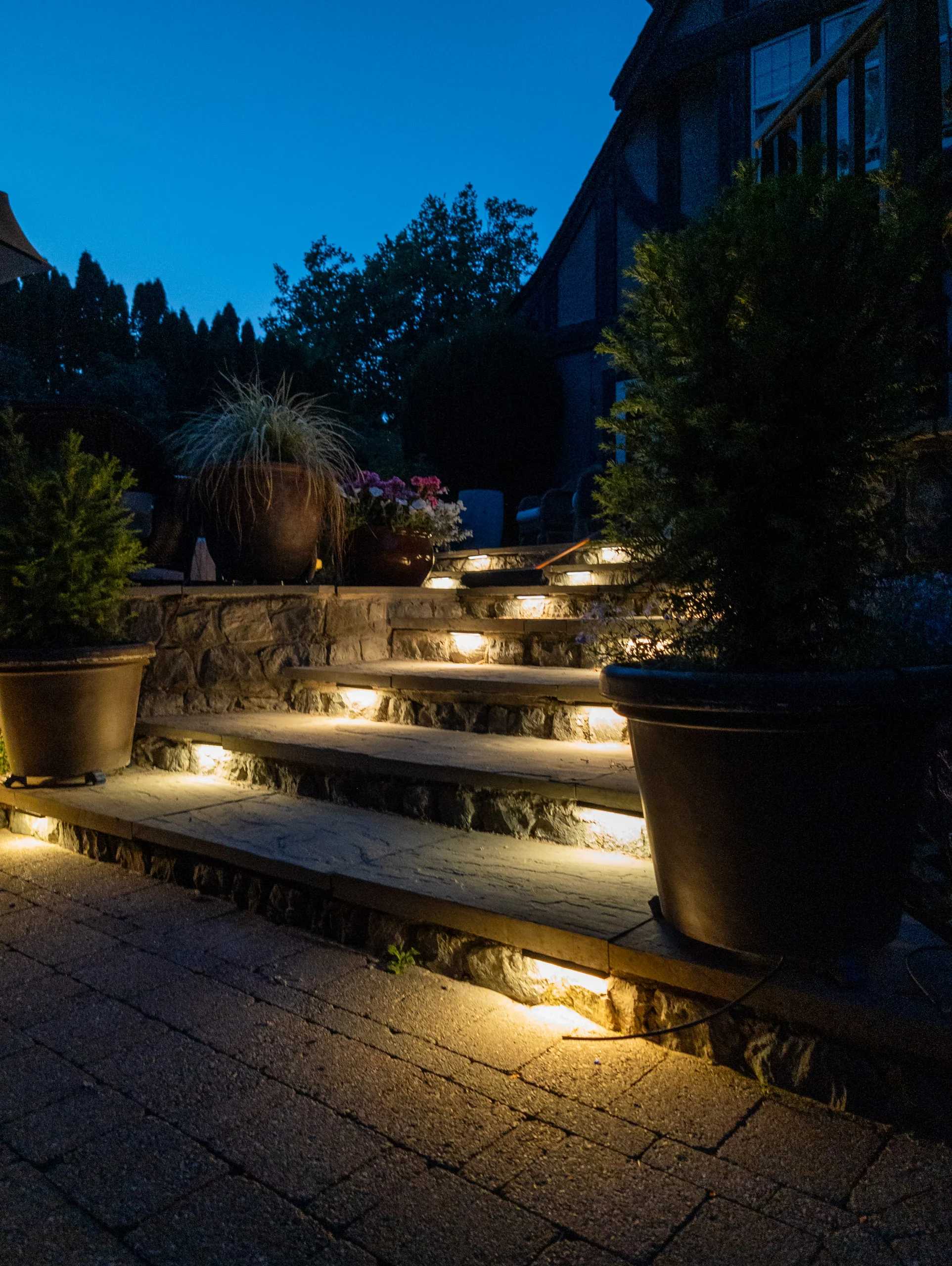
Landscape lighting can completely change how a property feels after dark. It can make the front of a home feel more welcoming, help mature trees stand out, make pathways easier to use and bring gardens back to life at night.
It can also go wrong pretty quickly. Too much light, bad fixture placement, glare, poor connections, cheap equipment and weak design can turn a good-looking property into something that feels flat or overdone.
So before you spend money on landscape lighting, it helps to understand what actually matters. This guide covers the basics, including cost, design, fixture selection, installation, maintenance, DIY vs. professional systems and some of the mistakes we see most often around Victoria.
Professional landscape lighting is more than putting lights around a yard. A good system is designed around the property, which means looking at the architecture, trees, gardens, pathways, grade changes, outdoor living spaces and the views from inside the home.
The goal is not to light everything. It is to decide what deserves attention and what should stay dark.
That balance is what gives a property depth after sunset.
At Light Right, we start with the property first and choose fixtures after we know what the design needs. You can see more about that approach on our landscape lighting page.
This is usually the first question, and the answer depends heavily on the property.
A focused professional project may start around $5,000. More complete residential projects often move into five figures, while large custom homes and estate properties can reach $50,000, $100,000 or more.
There is not really a meaningful top end because the scope can change so much from one property to another.
The cost can be affected by things like:
A small front-yard project and a full estate lighting system are not really comparable, even if both are called landscape lighting.
If you want the full breakdown, read our guide to landscape lighting costs in Victoria, BC.
Sometimes yes. Sometimes no.
If all you want is a little extra visibility beside a walkway, a large professionally designed system may be more than you need. But if you have invested in landscaping, mature trees, architecture or outdoor living spaces, lighting can extend that investment into the evening.
It can also completely change the arrival experience of a property. The front of the home feels different, the driveway feels different and the gardens stop disappearing once the sun goes down.
One thing homeowners often underestimate is the view from inside. A properly lit tree or garden can become part of the room when you look through the windows at night.
We go deeper into that in Is Professional Landscape Lighting Worth It in Victoria, BC?.
A good landscape lighting design usually feels simple when you look at it, but that does not mean it was simple to create.
The best designs are usually built in layers. You might have a mature tree acting as a focal point, softer lighting around garden beds, controlled light along a pathway, subtle architectural lighting on the home and darker areas between features to create contrast.
The important part is that everything does not compete for attention.
The goal is not more light. It is the right light.
That is probably the biggest difference between thoughtful landscape lighting and a property that simply has a lot of fixtures.

This gets overlooked all the time.
If you light every tree, every wall, every path and every garden bed equally, the property loses depth and nothing really stands out.
Darkness creates contrast. It helps your eye move through the property and makes the areas that are lit feel more intentional.
Sometimes the best thing we can do for a design is leave something alone.

A lot of people look at wattage or lumens first. Those numbers matter, but beam angle can be just as important.
A narrow beam puts light into a smaller area, while a wide beam spreads it out. That means two fixtures with similar output can create completely different results.
A tall trunk may look great with a narrow beam. A broad canopy may need something much wider.
Using the wrong beam angle can make a fixture look too bright, too weak or simply wrong for the subject.

For most properties, we generally start around 3000K. It gives a warm look while still showing architecture, plants and stone clearly.
That does not mean every property needs the same colour temperature. A warmer 2700K can work well around wood, older homes or more intimate outdoor spaces, while some modern properties may suit something slightly different.
The colour temperature should support the property, not fight with it.
This gets oversimplified a lot.
Brass is excellent for landscape lighting and we use it often because it performs well outdoors and ages naturally. That does not mean every aluminum fixture is bad.
There are high-quality aluminum fixtures designed to perform very well outdoors. What matters is the overall construction, coatings, seals, hardware, optics and how the fixture is built.
The better question is:
Is this fixture appropriate for where it is being installed?
Not:
Is it brass or aluminum?
Both can be good.
Replaceable LED lamps can make servicing and future changes easier, while integrated fixtures can offer very precise optics, compact designs and advanced controls.
We use both depending on the project.
The important thing is not to assume one technology is automatically better than the other.
A lot can go wrong when the system is poorly planned.
Some of the most common issues are:
One of the biggest problems, though, is simpler than all of those.
There was never really a design in the first place.
The fixtures were installed, but nobody thought about how the entire property should feel after dark.
We break those problems down in more detail in What Can Go Wrong with Landscape Lighting?.
DIY landscape lighting can absolutely make sense.
If you have a small garden, a short pathway or a few simple areas you want to light, you may be completely fine doing it yourself.
The dividing line usually appears when the property gets larger or the installation gets more complicated. Long cable runs, multiple transformers, mature tree lighting, hardscape, glare control and more advanced zoning all require more planning.
DIY can still look great. Professional work just becomes more valuable as the design and installation become more complex.
Our full comparison is here: DIY vs. Professional Landscape Lighting.
The process should involve more than an install day.
A typical project may include:
The size of the project changes the amount of planning. A focused front-yard installation may be relatively simple, while a large custom home with dozens of fixtures, recessed driveway lights, mature-tree lighting and several transformers is a very different project.
You can read the full process in What to Expect From a Professional Landscape Lighting Installation.

We think this is a huge part of landscape lighting.
A lot of people only think about what the property looks like from the street, but once you are inside, the exterior becomes part of the view.
A mature tree outside a dining room window can become a feature at night. A dark garden outside a large living-room window can disappear completely.
At the same time, a badly placed fixture can create glare directly through the glass.
A good design considers both sides of the window.
Yes.
The landscape changes. Plants grow, mulch gets added, trees fill out, fixtures get bumped and lenses get dirty.
A system that looked perfect the first night may need adjustment later.
Maintenance can include:
We generally recommend looking at the system periodically instead of ignoring it for years.
Usually, yes.
A system can often be designed with future expansion in mind. You might start with the front yard and major trees, then add the backyard or outdoor living areas later.
The important thing is planning ahead.
Transformer size, cable routes and controls can be chosen from the beginning to make future phases easier.
Modern LED landscape lighting systems can use relatively little power compared with older lighting technologies.
That said, low voltage does not automatically mean energy efficient. The actual energy use depends on the number of fixtures, wattage and how long the system runs.
Timers, scheduling and controls can help manage operating time, but the design still matters more than simply choosing “low-voltage” equipment.
There is no single number because fixture construction, LED quality, drivers, connections, installation quality and the environment all affect lifespan.
Victoria properties can be hard on outdoor equipment because of moisture, irrigation, soil and coastal conditions. A professional system should be designed with that environment in mind.
Good equipment helps, but the quality of the installation matters just as much.
No.
Some properties benefit from advanced controls, while others do not need them.
Zoning, dimming, tunable white and RGBW colour control can be useful on larger or more complex properties. But adding technology does not automatically make the lighting better.
Technology should support the design, not become the design.
Ask questions, and not just about the fixtures.
Ask how they approach design, whether they return after dark, how they handle glare, how they plan transformers and cable, what happens if the landscape changes and how they service the system later.
Also ask why they are choosing the fixtures they are recommending.
A good answer should be more specific than:
“That is what we always use.”
You can, but make sure you are comparing the same thing.
Two companies can quote the same property and propose completely different systems. One may include nighttime aiming, better fixtures, multiple transformers, tree lighting and more detailed design work, while another may simply install a lower fixture count and leave.
Price matters, but scope matters just as much.
Landscape lighting can be simple, but it can also be surprisingly complex.
For a small garden, a few thoughtful fixtures may be all you need. For a large property, the design may involve mature trees, architecture, hardscape, outdoor living spaces, multiple transformers and advanced controls.
The scale can change completely, but the principle should not.
Start with the property. Decide what deserves light. Keep the glare down. Leave some areas dark. Choose the right fixture for the job. Then aim the system properly after sunset.
That is what creates a property that feels intentional at night, not just bright.
At Light Right, we design and install professional landscape lighting throughout Greater Victoria and Vancouver Island.
We work on everything from focused residential projects to larger custom homes and estate properties.
If you are thinking about lighting your property, we can walk it with you, talk through the opportunities and tell you where professional lighting makes sense and where it may not.
See what happens during a professional landscape lighting project, from the initial site walk and design through installation, night aiming and ongoing maintenance.
Choosing landscape lighting fixtures is about more than style. Learn how beam angle, output, material, glare control and application affect the finished design.
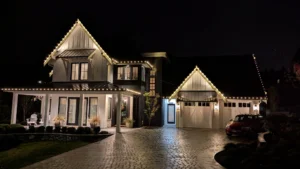
How Much Does Professional Christmas Light Installation Cost in Victoria, BC? If you've ever looked into having your holiday lights professionally installed, you've probably found that prices vary widely and specific numbers are hard to come by. That's partly because the cost of professional Christmas light installation depends on the scope of your property — […]